
High-Throughput
In Vitro Screening
The only US-based company to provide complete support from synthesis to screening.

Overview
With our robust and streamlined workflows, we can rapidly synthesize and screen oligonucleotide libraries to identify leads with optimal activity, minimal toxicity, and strong target engagement, enabling faster, data-driven development decisions.
Stages We Cover
Explore our comprehensive solutions tailored for the development, manufacturing and testing of oligonucleotides from research to preclinical stage.
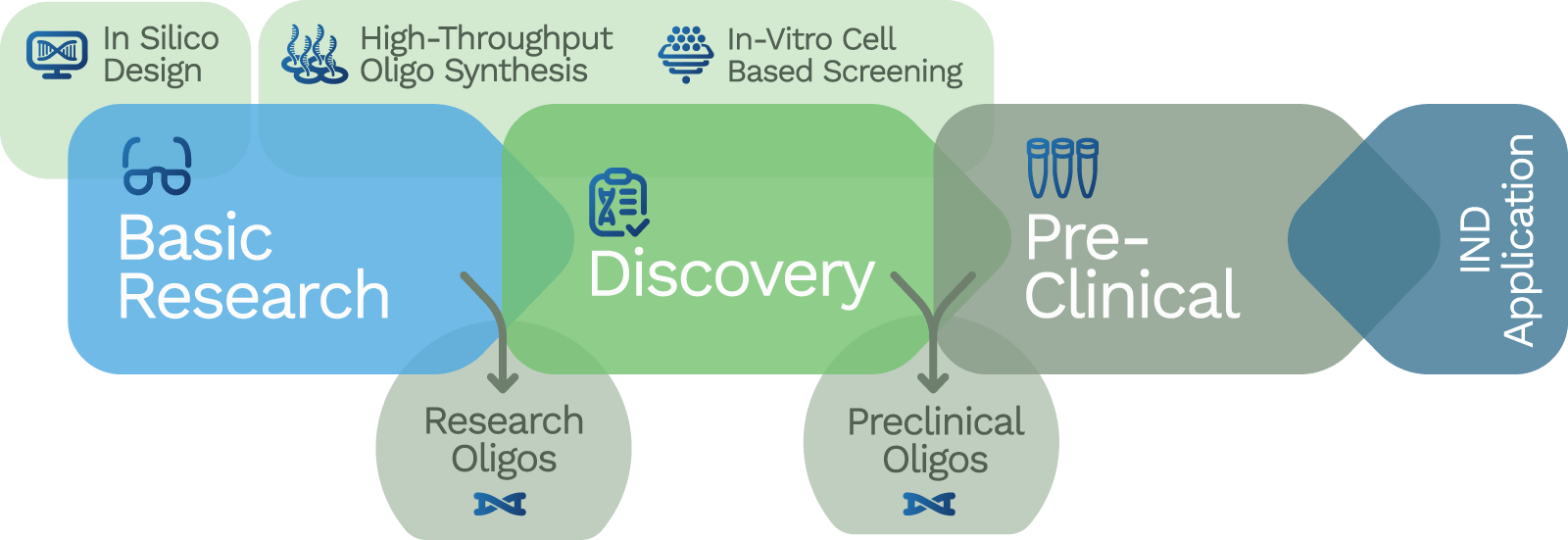
Find Your Lead Candidates Faster With Us!

In as fast as 12 weeks!

High-Throughput Oligo Synthesis


In Vitro Screening for Potency, Selectivity & Toxicity

High-Throughput & Scalable Synthesis of Modified Oligos

Cell-Based Screening for Potency and Selectivity

In-Vitro Assessment of Cell-Based Toxicity and Immune Response
High-Throughput & Scalable Synthesis of Modified Oligos
-
Deliver large quantities of modified oligos within 3 weeks:
- Up to 5,000 modified oligos at 1 nmol scale.
- Up to 200 modified oligos for mouse studies.
- Up to 100 modified oligos for non-GLP, non-human primate studies.
- Delivered in 96-well plates at your desired concentration for cell-based screening.
Advanced Modification Expertise (see our full mod list)
- Rare and common 2′-position ribosugar modifications.
- Various backbone phosphoryl-linkages.
Custom Conjugation
- On-resin or post-synthesis conjugation of active moieties including lipids, carbohydrates, peptides and more.
Cell-Based Screening for Potency and Selectivity
- Rapidly screen > 240 oligos/week in a wide range of cell models by qRT-PCR.
- Customized luciferase reporter assay for ON/OFF-target screening.
- Provide high-throughput nucleic acid extraction and purification ready for sequencing and downstream selectivity analysis.
In-Vitro Assessment of Cell-Based Toxicity and Immune Response
-
Ability to measure cell death and toxicity using:
- Cell titer/glo.
- LDH release assays.
- Caspase 3/7 assays.
- Screening with specific pathway dependent reporter cell models.
- Screening for innate immune response.
- BJAB assays for innate immune activation assessment of ASO candidates.
- Cytokine release assays (e.g., TNF-α, IL-6, IL-10) to evaluate immunostimulatory effects.

Case Studies
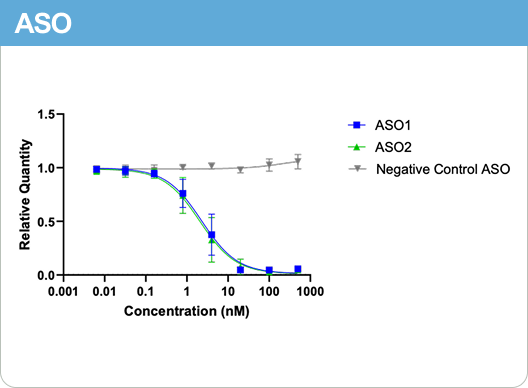
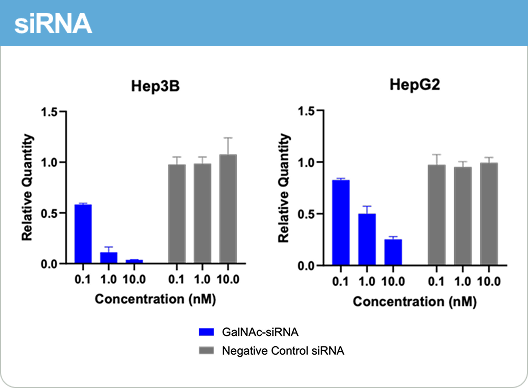
- The RT-qPCR assay has been validated for PCR efficiency and tested in both 1-Plex and 2-Plex formats. Results demonstrated a strong dose-response knockdown for ASO and GalNAc-siRNA molecules in Hep3B and HepG2 cells.
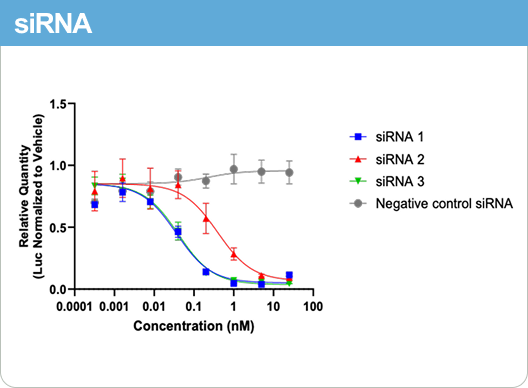
- The luciferase reporter assay has been established and optimized to detect dose-response knockdown of siRNA at 48 hours post-transfection.
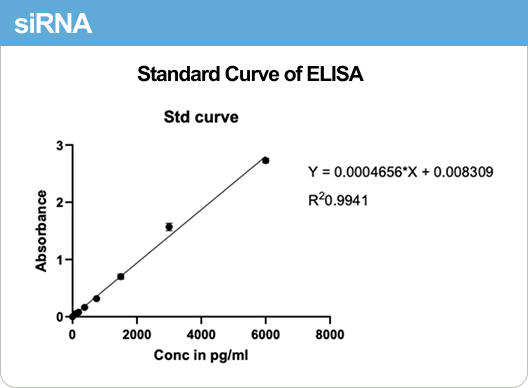
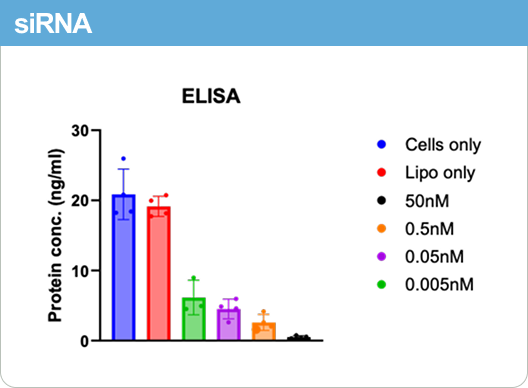
- The ELISA assay quantifies dose-response knockdown of siRNA at the protein level in Hep3B cells, applied 48 hours post-transfection.
RT-qPCR Assay
Luciferase Reporter Assay
Advantages
- Flexible plasmid design and production capabilities.
- Utilize luciferase plasmids to express full-length or partial transcripts.
- High-throughput workflow allows testing multiple gene targets in the same cell line.
Applications
- Ideal for targets with low expression in standard cell lines.
- Ideal for screening specific sequences (e.g. mismatches) or ranking sequences and chemical modifications.
- Ideal for ON/OFF target screening conducted in parallel.
ELISA Assay
Workflow

Screening Includes:
- Expert experimental design with optimized conditions and appropriate controls.
- High-quality bulk RNA-Seq with rapid turnaround time.
- Advanced data analysis and visualization (e.g. volcano plots, heatmaps, & Manhattan plot).
- Clear interpretation of results to support ON/OFF-target decision-making.
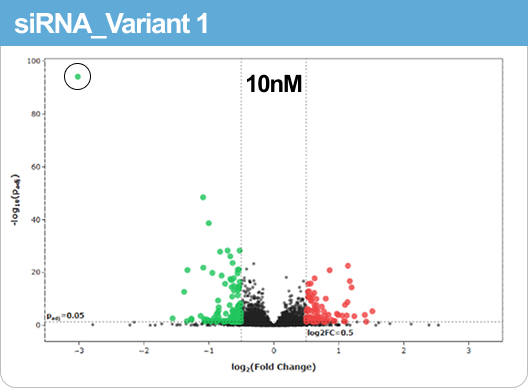
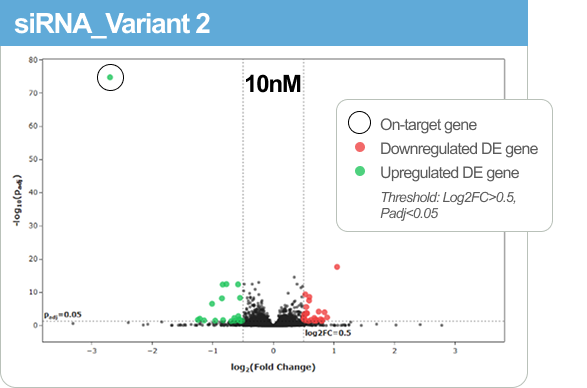
- Differential expression analysis is used to identify chemical variants with reduced off-target effects.
- On vs off-target dose-response analysis performed as a follow up to determine risk assessment.
qPCR & LDH Assay
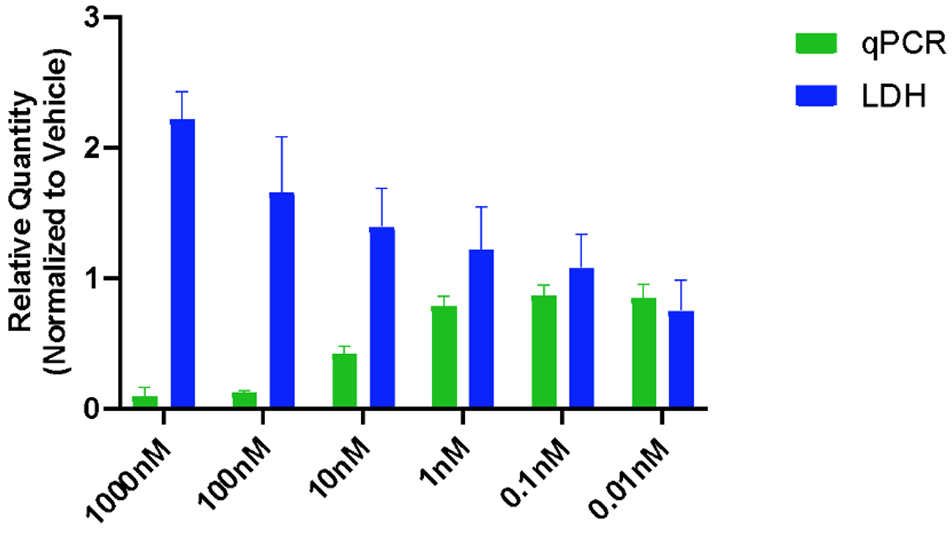
In this data set, dose-response on-target gene knockdown and Lactate Dehydrogenase (LDH) induction of Cholesterol-siRNA were evaluated in Hep3B cells after 72 hours of free uptake. LDH induction, which serves as an indicator of membrane integrity and cytotoxicity, can be performed in parallel with RT-qPCR screening to enable simultaneous assessment of both potency and safety.
Cell Titer Glo
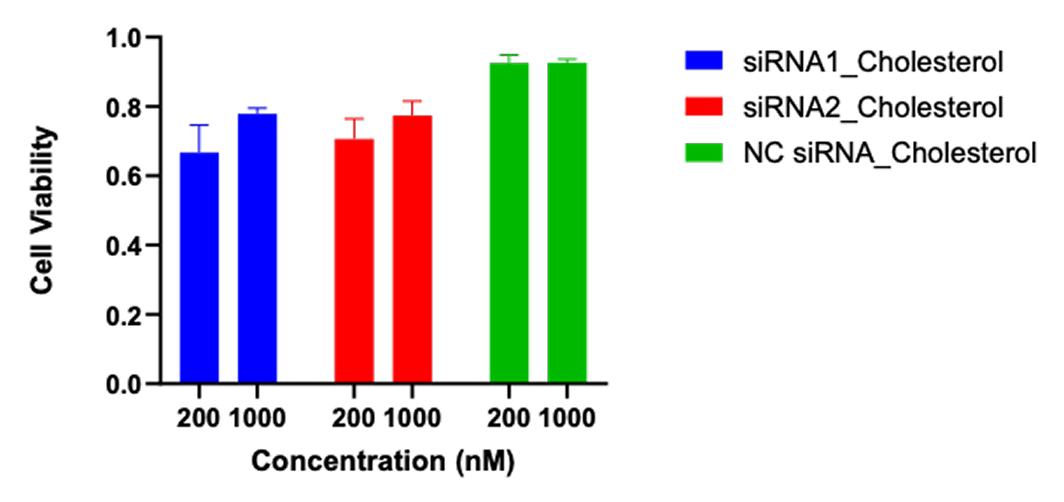
Cell viability was assessed using the Cell Titer-Glo assay, demonstrating a dose-dependent response to cholesterol-conjugated siRNA in HepG2 cells following 72 hours of free uptake.
- In addition to immortalized and engineered cell lines, we support iPSC-based models, including both commercial and patient-derived cells, as well as primary hepatocytes from human, non-human primate, and mouse.
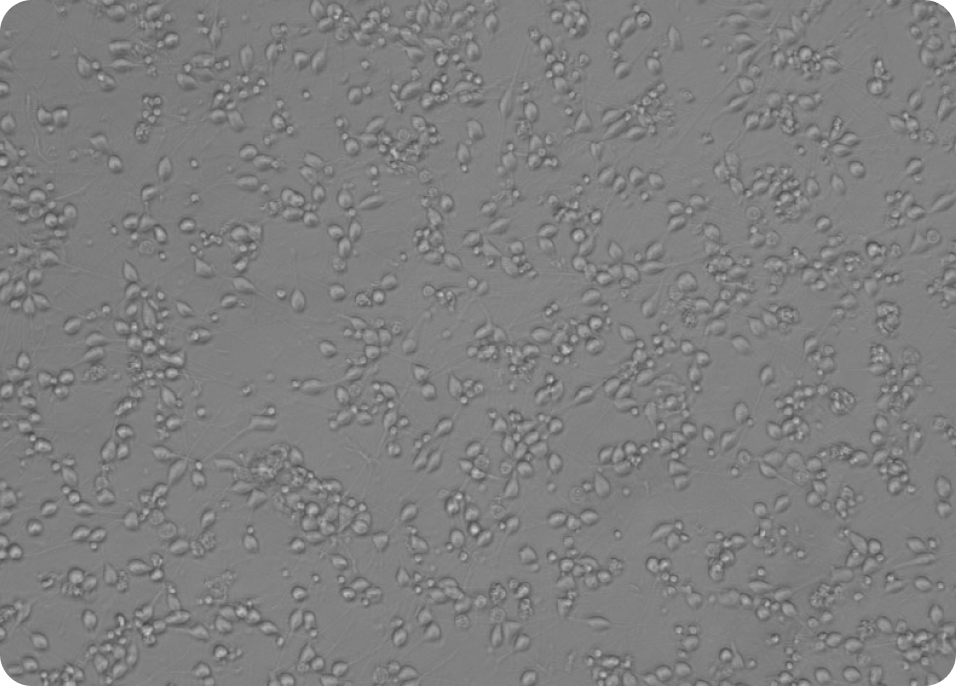
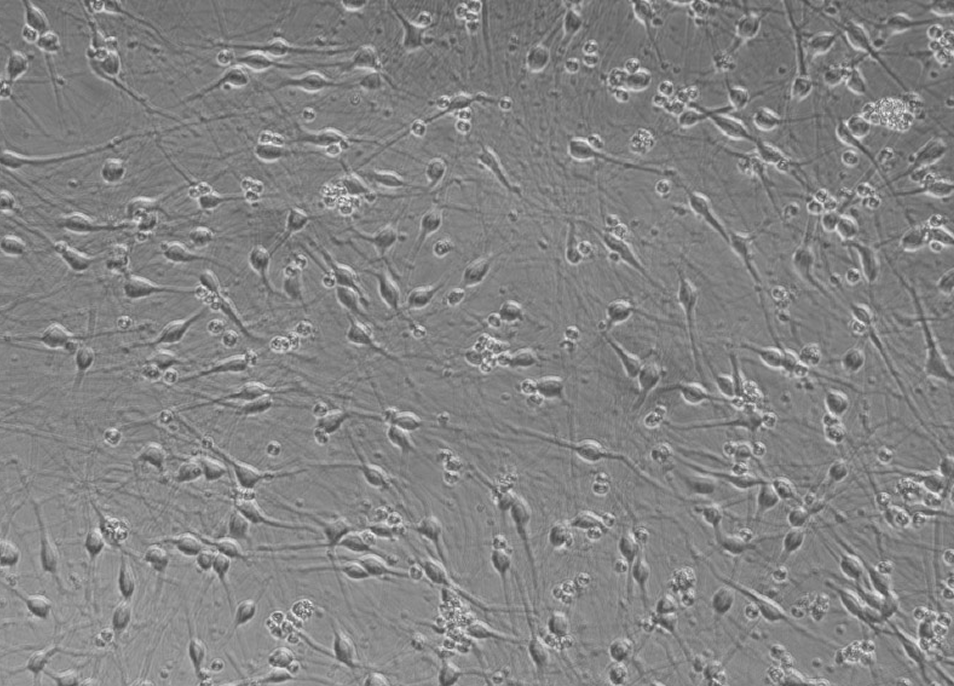
iPSC-neuron differentiation, images taken at Day 1 and Day 7 under microscopy
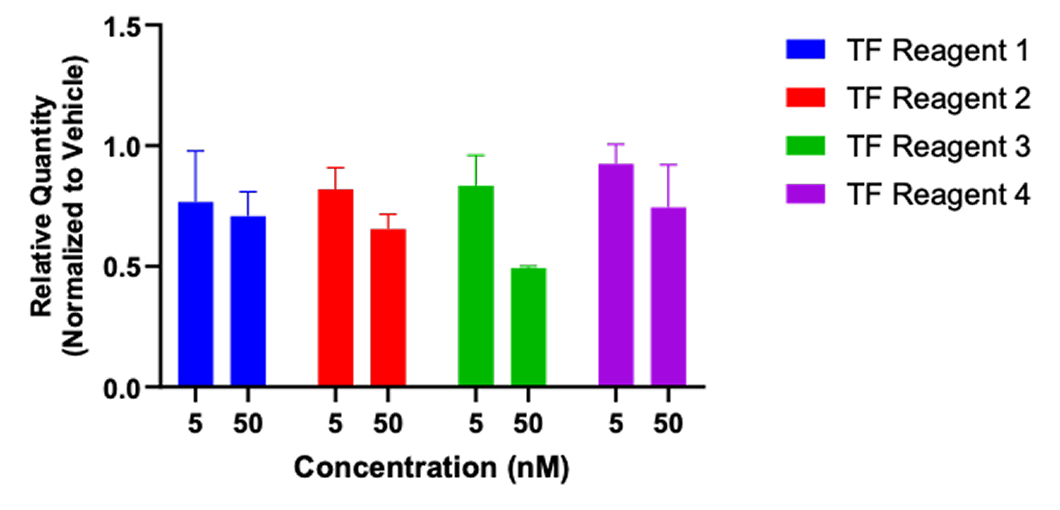
KD of C16-siRNA in iPSC-neuron by transfection
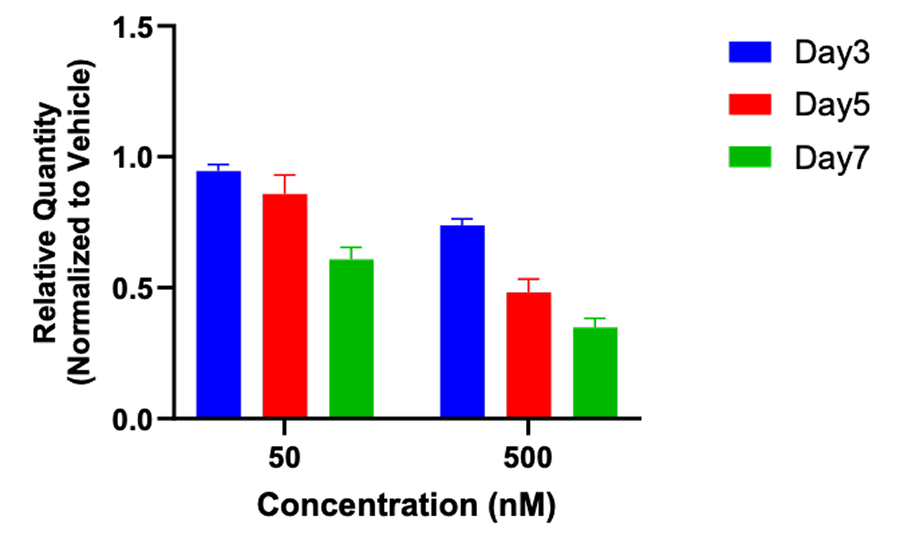
KD of C16-siRNA in iPSC-neuron by free uptake
Primary Hepatocytes
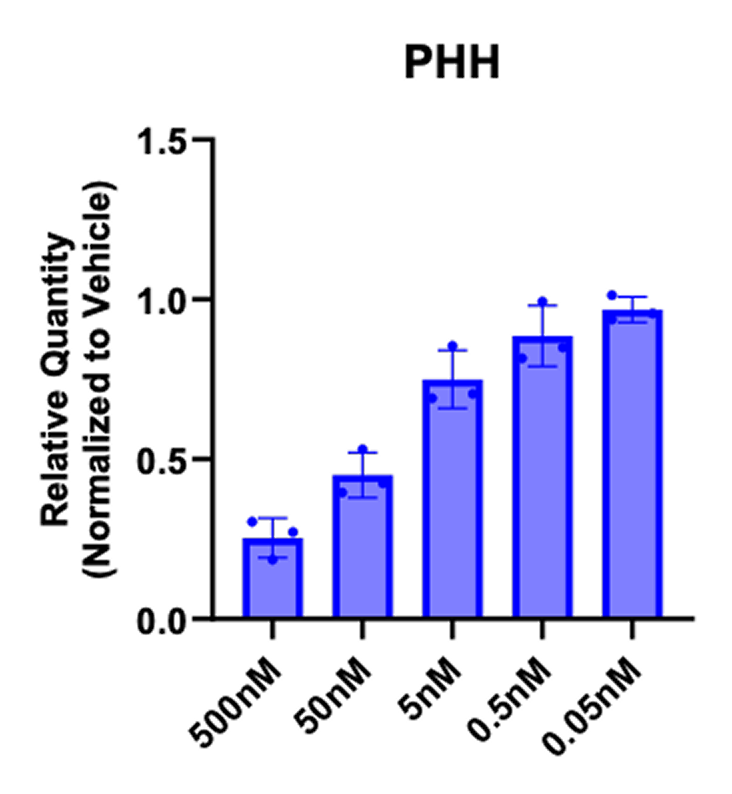
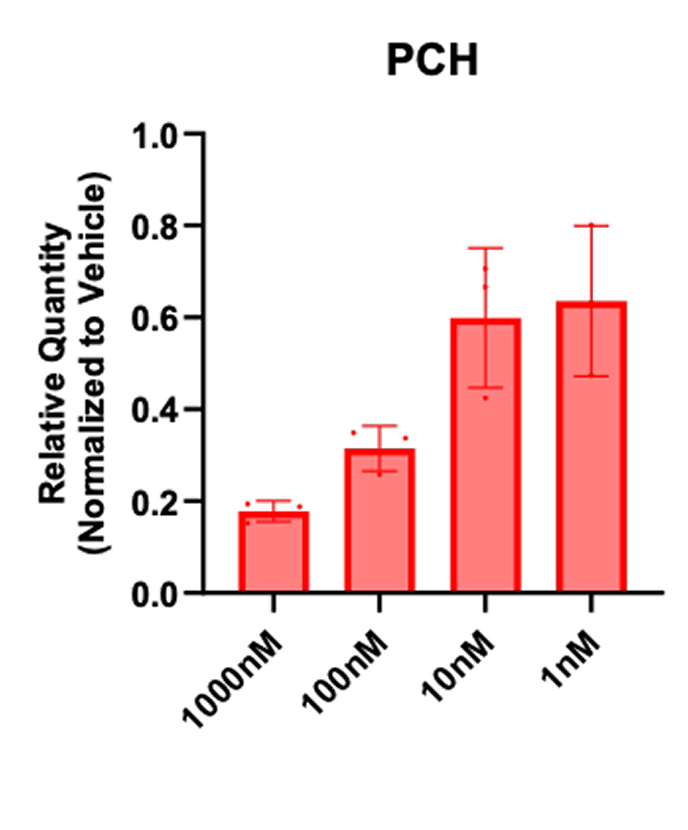
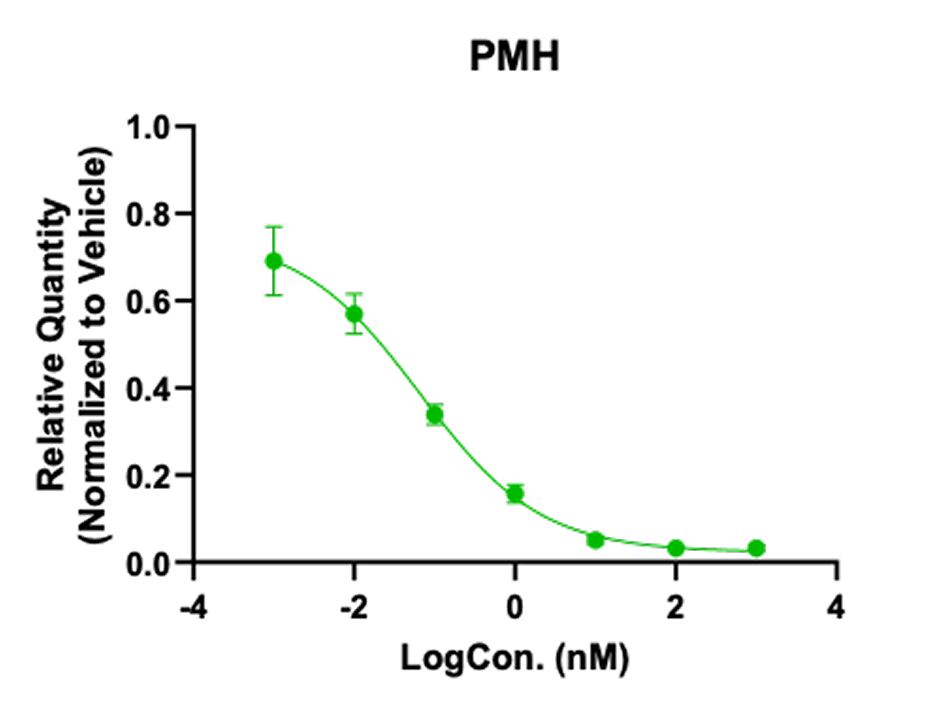
Knockdown of GalNAc-siRNA in primary human (PHH), cynomolgus monkey (PCH), and mouse (PMH) hepatocytes following 72-hour free uptake
Applications of Oligos
With decades of experience, our expert team specializes in manufacturing oligos tailored to diverse scientific applications, ensuring your specific needs are met.

Research Oligos
Extensive list of customization allows researchers to achieve their research goals.
- Branched/dendrimer
- Circular DNA/RNA
- Ultra-long oligos (150–200nt)
- DNA-encoded library (DEL)

Diagnostic Oligos
Broad selection of various dyes and probes.
- Primers PCR/qPCR
- FISH/MERFISH Probes
- FRET Probes
- NGS Adapters
- Molecular Beacons

Therapeutic Oligos
Guarantee ultra low endotoxin even for lipid modified oligo.
- Antisense
- Immunostimulatory
- mi-/sa-/siRNA
- Aptamer
- CRISPR gRNA
Shop Our Oligo Store!
Bundle ASO Library and In Vitro Screening and Save!
Skip the back-and-forth emailing. Get your order processed immediately using a credit card or your standard Purchase Order (PO).
First-Time Customer Discount Bundle & Save