
Overview
Synoligo supports oligonucleotide discovery from in silico design through lead identification and optimization. With integrated capabilities in sequence selection, complex oligo synthesis, and high-throughput in vitro screening, we help teams move from concept to validated candidate with greater efficiency and confidence.
What are Oligonucleotides?

Oligonucleotides are short fragments of nucleic acids, which can either be DNA or RNA. These small molecules can be synthesized in a lab setting and used in a wide range of applications such as genetic testing, research, diagnostics and therapeutics.
How do oligonucleotides get synthesized?
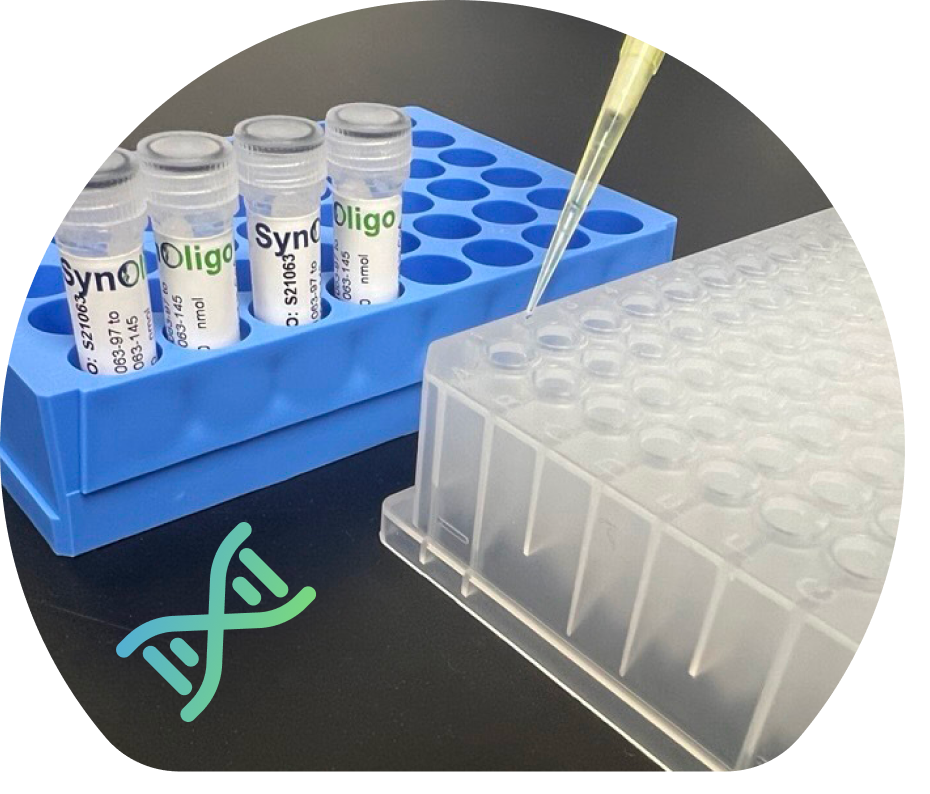
Oligo synthesis began as early as the 1950s using different methods such as H-phosphonate, phosphodiester, and phosphite triester. With gradual improvements, phosphoramidites method became the go-to process and industry standard. This method uses solid-phase support, where an oligonucleotide being assembled is covalently attached and remains bound throughout the entire process. Check out the steps below on how each nucleotide is added to the oligonucleotide.
How do oligonucleotides get purified?
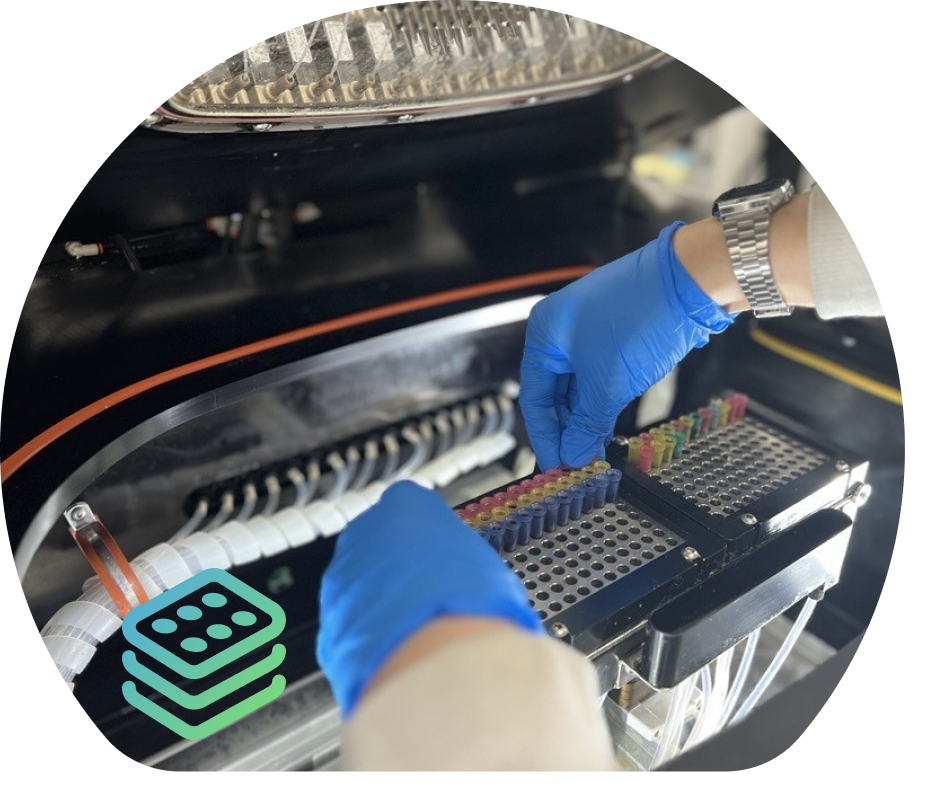
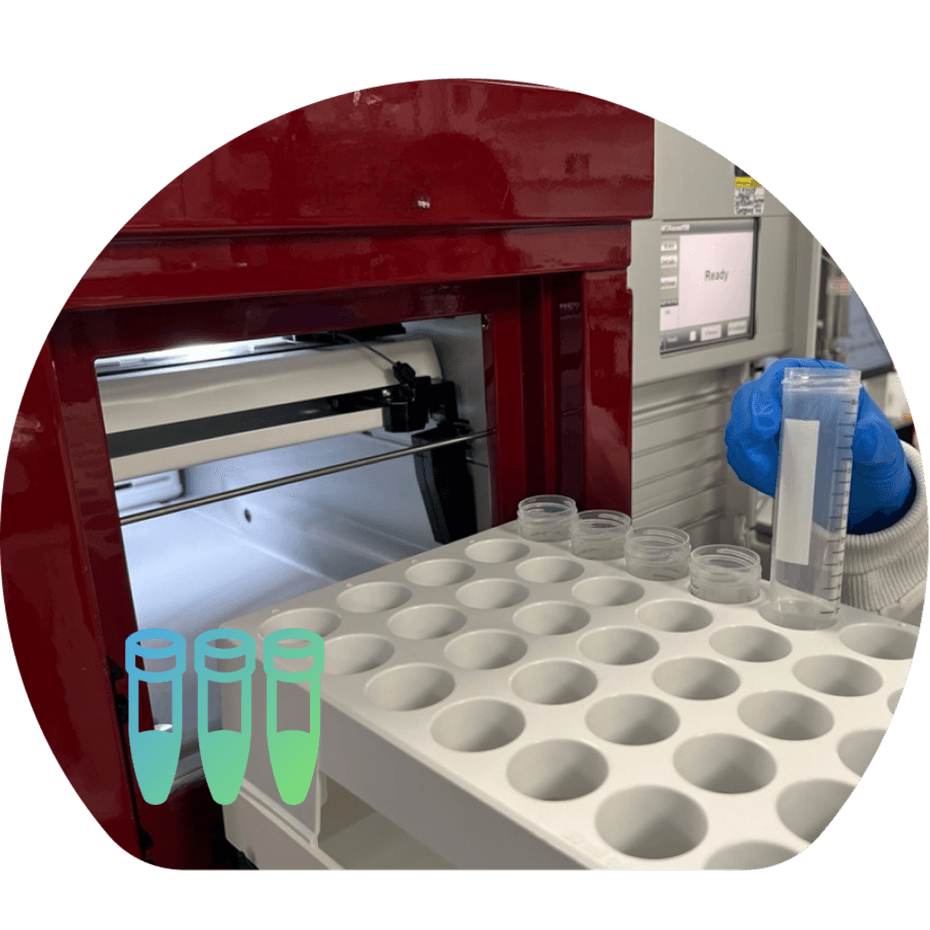
Post synthesis, oligonucleotides will go through purification to remove any synthesis byproducts like impurities from the removal of protecting groups, truncated sequences or chemical contaminants. There are several standard purification methods Synoligo and the rest of the industry uses. Read more below on each method and their application.
What QC methods are used for final product?
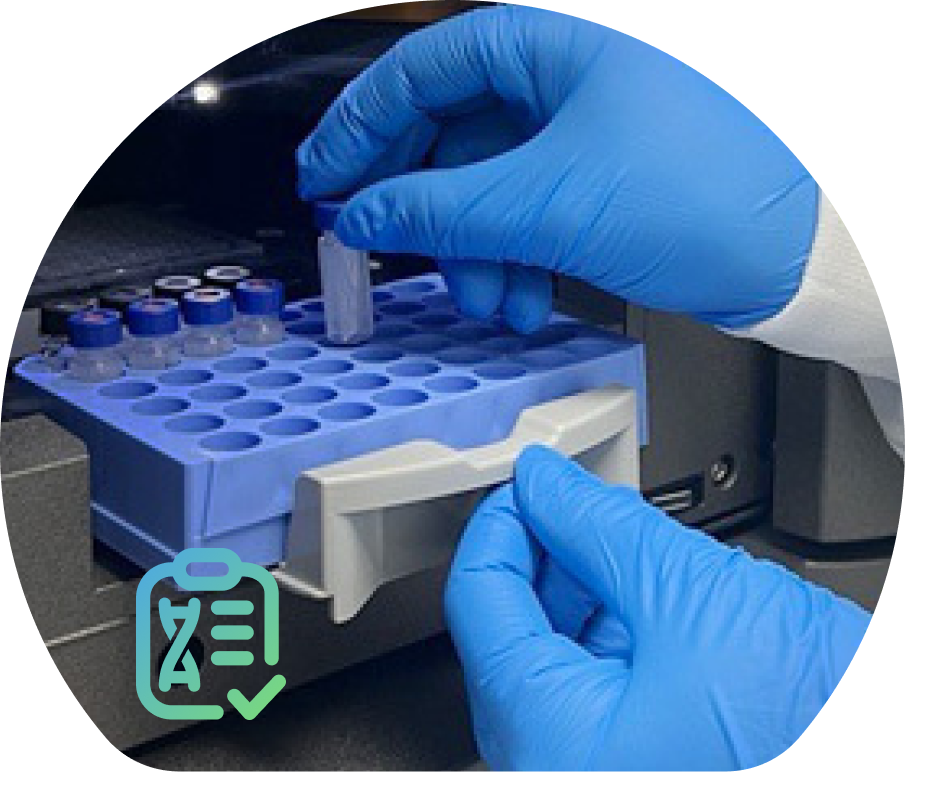
QC is a critical step in oligo synthesis to ensure synthesized product has the correct sequence and purity. Various QC methods can be used to assess the integrity of the oligos to meet the required specifications and applications.
Stages of Synthesis
 Stage 1
Initiation
Attachment of the first nucleotide to a solid support. The most commonly used solid supports are polystyrene- and controlled-pore-glass-based (PS or CPG). This is the starting point of the growing chain.
 Stage 2
Activation & Coupling
After the removal of the 5’-DMT protecting group from the support-bound 3’-nucleoside, detritylation, the next base is ready to be added. An excess of appropriate nucleoside phosphoramidite monomer gets protonated through dissolving with an activator (tetrazole) in acetonitrile. The process allows the coupling of 5’-hydroxyl group of the support-bound nucleoside to the new nucleotide forming a phosphite-triester.
 Stage 3
Capping
To prevent unreacted 5’-hydroxyl group of the support-bound nucleoside to partake in the next coupling step, capping is required to block the 5’-hydroxyl group. Acetic anhydride and N-methylimidazole (NMI) combine to form activated acetic acid, which is used for acetylation of the 5’-hydroxyl group.
 Stage 4
Oxidation & Detritylation
The bond of the phosphite-triester from the coupling step is unstable to acid and needs to be strengthened through iodine oxidation before the next detritylation step. Detritylation happens again to remove the 5’-end of the support-bound DNA chain so the primary hydroxyl group can bind with the next nucleotide. The cycle will repeat for each base until the required sequence is met.
 Stage 5
Cleavage from Solid Support
The linker that attaches the 3’-end of the oligo to the support group and the most frequently used in synthesis is succinyl linker. This linker can be cleaved by incubating in ammonium hydroxide for one hour at room temperature. This step can be done on some synthesizers or manually by removing the column from the synthesizer and washing it with ammonium hydroxide.
 Stage 6
Deprotection
To get ready for purification, the oligonucleotide is heated in the concentrated aqueous ammonia from previous step to remove protecting groups from the heterocyclic bases (A, C & G), and the phosphodiester backbone (protected as 2-cyanoethyl phosphotriesters).
Purification Methods
Desalting
This method can remove salts and residual solvents but not truncated or incomplete sequences. It is ideal for primers, screening libraries, and high-throughput projects where yield and cost matter most.
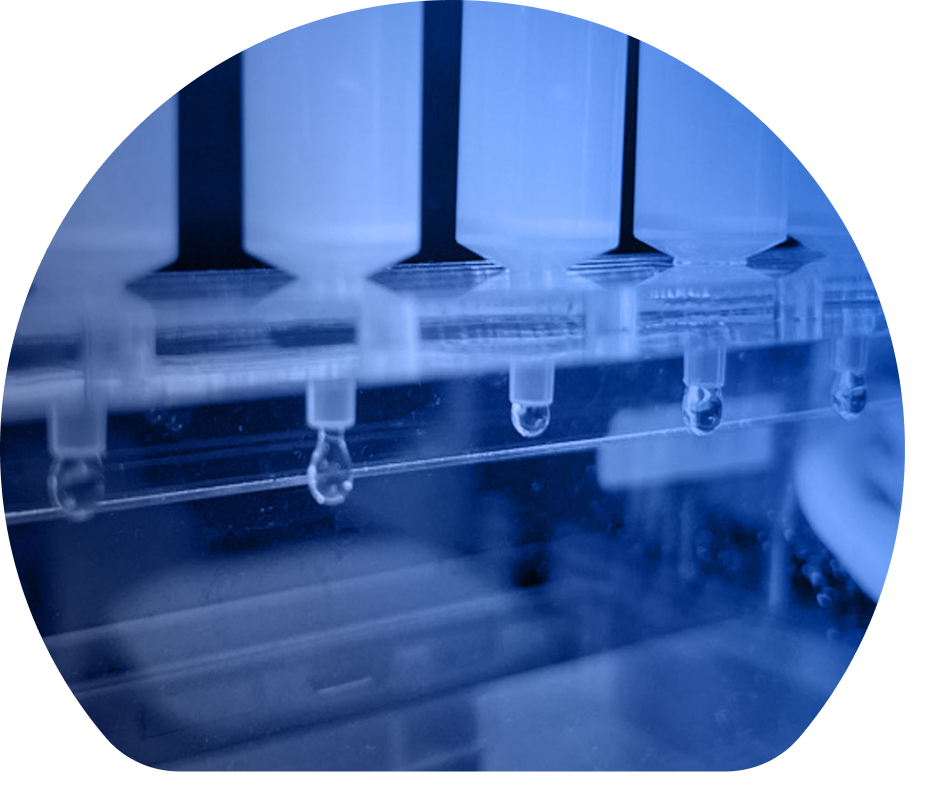
Gel Electrophoresis
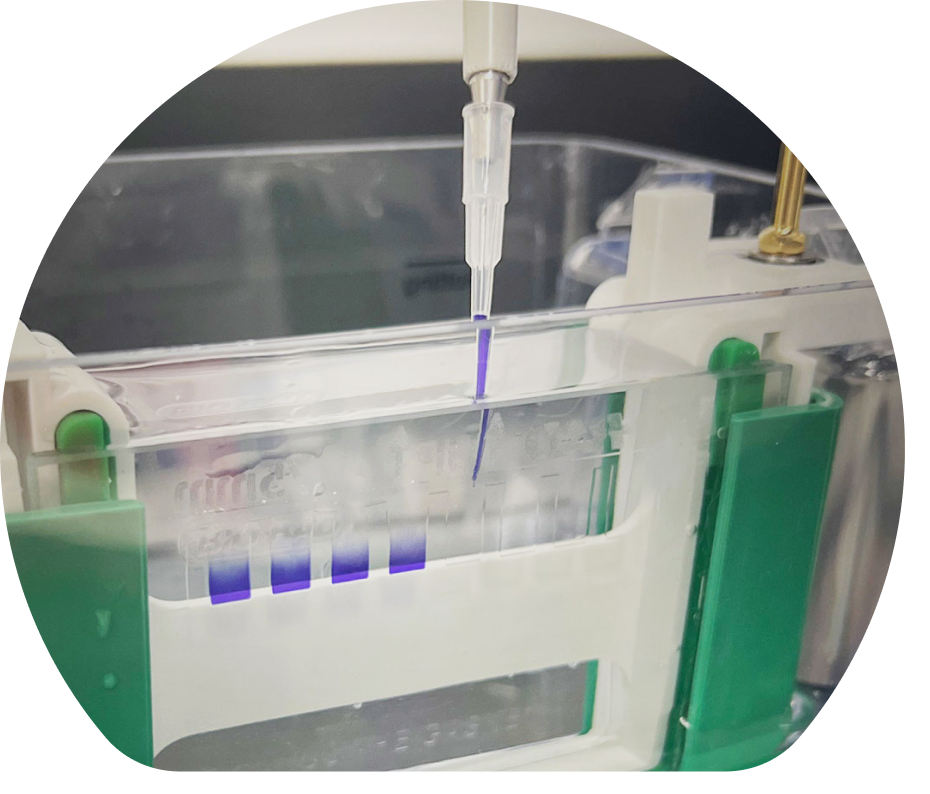
PAGE Gel is often used to separate oligos based on molecular size. Full length products are isolated by running them through a polyacrylamide gel matrix. It is recommended for longer oligos and applications where removal of truncated sequences is important.
High-Performance Liquid Chromatography (HPLC)
Different types of HPLC can be used to separate full length product from impurities.
Reverse Phase (RP-HPLC)
Commonly used to check for purity of modified or labeled oligos. This method separates based on hydrophobicity.
Anion Exchange (AEX-HPLC)
Commonly used for phosphorothioate-modified oligos and it is separated by charge.
Hydrophobic interaction chromatography (HIC)
Hydrophobic interaction chromatography separate molecules based on their surface hydrophobicity. Contrary to AEX, product elutes in low salt concentration. Many applications have been published using this technique for DMT-ON purification and then on-column DMT cleavage.
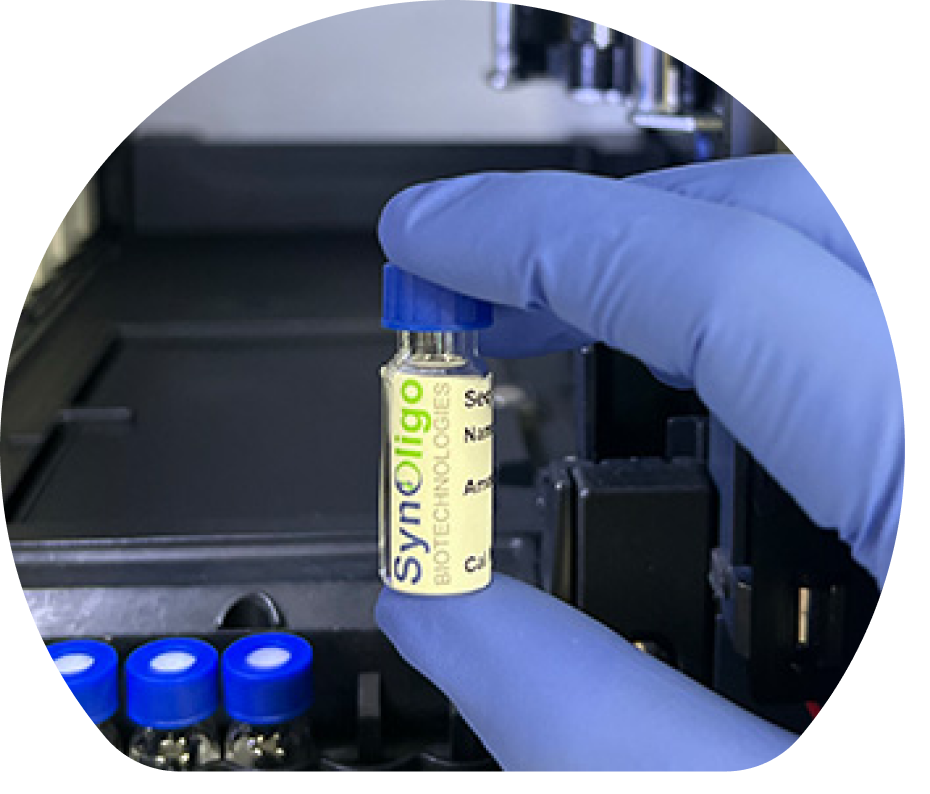

Post Purification QC Methods
Molecular Weight by Mass Spectrometry

The most preferred method for diagnostic and therapeutic oligos. It is used to confirm the integrity and the molecular weight of the oligo. In ideal scenarios, oligo sequence information can be inferred from MW determination. To get absolute confirmation of sequence, MS/MS or NGS has been used.
Purity by Chromatography
Liquid chromatography is commonly used to assess the purity of the full-length product and gauge product quality. Separation can be based on reverse-phase, ion exchange, size exclusion, or hydrophobic interaction. In high-throughput modes, a generic LC method (typically reverse-phase) is often used, prioritizing speed over quality.
Moisture Content
Oligonucleotides are highly hygroscopic, meaning they readily absorb moisture. No matter how long you dry the product, residual water will always remain. This can be determined following USP <921> guidelines.
Sodium Content
High sodium content can disrupt ion pairing during ion-pair reversed-phase liquid chromatography (RP-LC) analytical separation, altering retention times and causing peak splitting. Additionally, sodium ions can interfere with downstream quality control processes, particularly in mass spectrometry, by suppressing signals due to their high ionization energy and competing with other analytes for ionization. Therefore, measuring and desalting are essential steps to ensure high-quality control of oligonucleotides.
Endotoxin
Testing ensures that the toxic component, Lipid A, is at or below levels recommended by the United States Pharmacopeia (USP) and FDA. Read our blog post to learn more about the various tests used to assess safety levels.
Heavy Metal
Screening for metal contamination is becoming increasingly important for product safety. ICH classifies heavy metals into three classes, 1, 2, and 3. Class 1 metals, including As, Cd, Pb, Hg, should be essentially absent as they are known or strongly suspected human toxiants. Class 2 metals, divided into two subcategories A and B based on their probability of occurring in the drug product, include Co, Ni, V as A and Ag, Au, Ir, Os, Pd, Pt, Rh, Ru, Se, and Tl. Class 3 metals has low toxicities in general including Ba, Cr, Cu, Li, Mo, Sb, and Sn.
Residual Solvents
Residual solvents are categorized into three classes based on toxicity, with Class 1 being the most toxic. To meet high product safety requirements, testing for residual solvents used during synthesis, purification, or in excipients or drug products is necessary. Customers can choose to test the final product or each individual component.
Bioburden
This test is crucial for determining the number of microbes present in the product. Microbial extraction methods include mechanical testing, vortexing, and sonication. The extract fluid is then used for culturing different organisms and tested by pour plating or filtration.

Synoligo's Competitive Advantage

State-Of-The-Art Equipment
 Optimal efficiency in production, purification and lyophilization

Large Selection Of Raw Materials for Common and Rare Modifications
Enable quick start of your project
Specialization in Complex Oligo Modifications
Can take on custom projects that are difficult or do not fit in standard workflow from other CROs
Automated Workflow
Can meet any demands for low & high throughput (column & plate formats)
Stringent QC Method
Can guarantee accuracy, yields and quality based on the project
Additional Services with Custom Project
Process transfer for final product manufacturing – clinical use
Applications of Oligos
With decades of experience, our expert team specializes in manufacturing oligos tailored to diverse scientific applications, ensuring your specific needs are met.

Research Oligos
Extensive list of customization allows researchers to achieve their research goals.
- Branched/dendrimer
- Circular DNA/RNA
- Ultra-long oligos (150–200nt)
- DNA-encoded library (DEL)

Diagnostic Oligos
Broad selection of various dyes and probes.
- Primers PCR/qPCR
- FISH/MERFISH Probes
- FRET Probes
- NGS Adapters
- Molecular Beacons

Therapeutic Oligos
Guarantee ultra low endotoxin even for lipid modified oligo.
- Antisense
- Immunostimulatory
- mi-/sa-/siRNA
- Aptamer
- CRISPR gRNA
Shop Our Oligo Store!
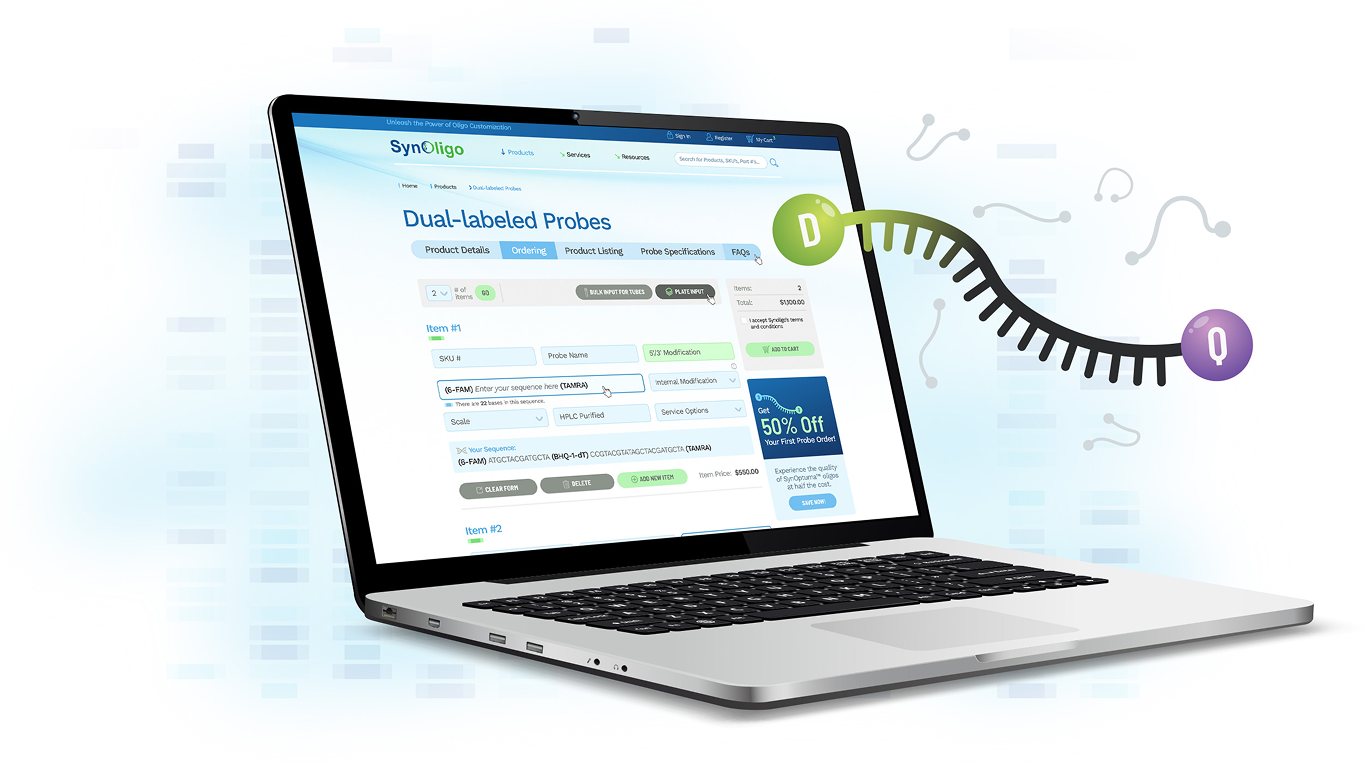
Order Diagnostic and Therapeutic
Oligos Instantly Online!
Skip the back-and-forth emailing. Get your order processed immediately using a credit card or your standard Purchase Order (PO).